
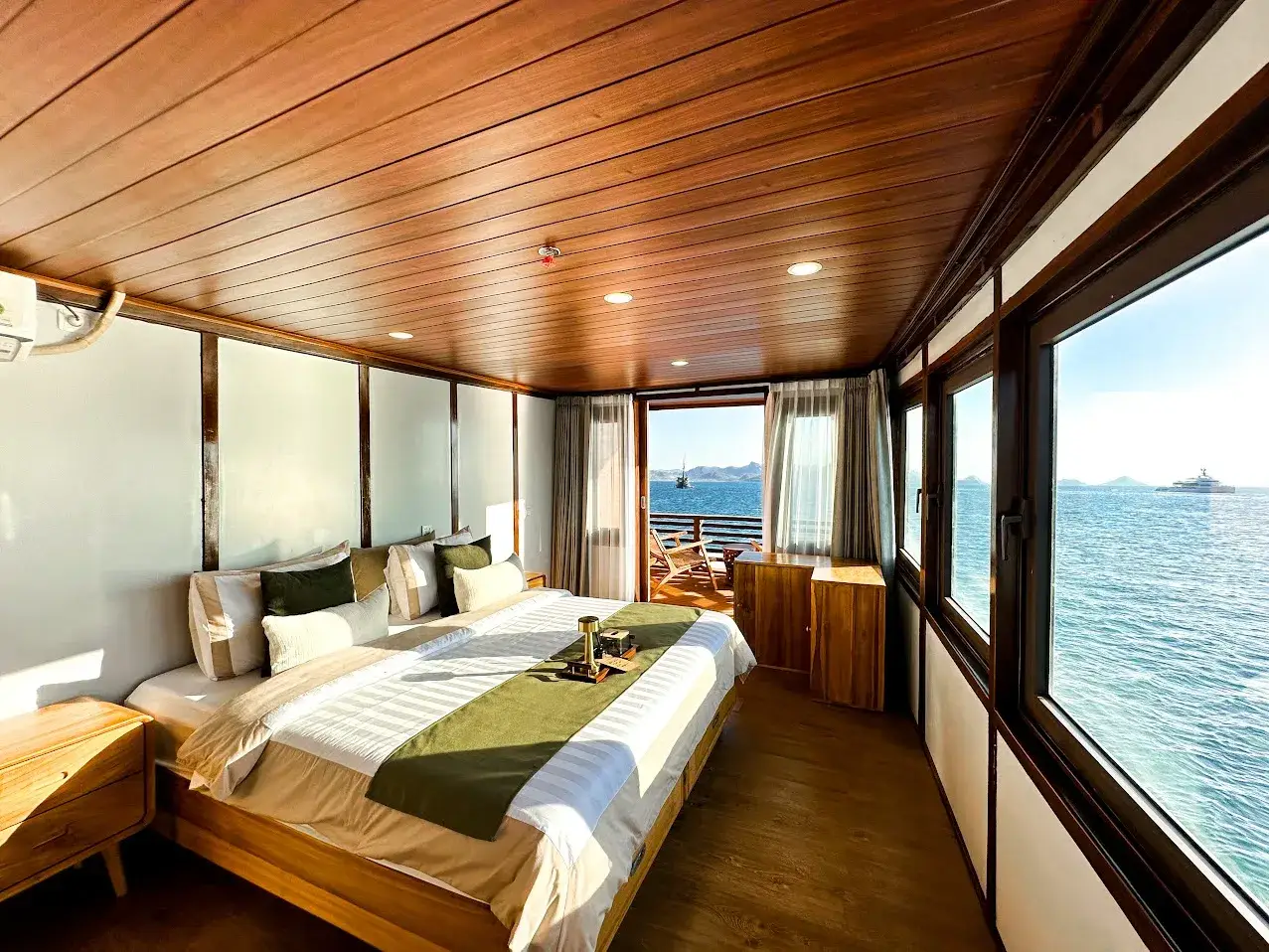

On a phinisi the steadiest berths are low and central, which on Neptune Cruise means the four lower-deck Deluxe cabins. Top-deck cabins with balconies feel more motion in swell. Take medication before you sail rather than after symptoms start, and stay on deck with the horizon in view.
Why does cabin position change how much you feel?
A boat rotates around a point roughly amidships and low in the hull. The further you are from that point – higher up, or further forward or aft – the greater the arc you travel through for the same amount of sea. Someone sleeping on the top deck at the bow is physically moving several times further, and faster, than someone in a lower midships cabin experiencing the identical wave.
This is not a comfort ranking of the cabins in any other sense. It is geometry, and it runs directly against price: the cabins with the best views and private balconies are the ones furthest from the still point.
| Cabin | Deck | Motion felt | Trade-off |
|---|---|---|---|
| Deluxe Cabin (4) | Lower deck | Least – low and enclosed | Sea-view window rather than a balcony |
| Junior Suite (1) | Main deck | Moderate – central, one level up | Balcony and direct deck access; a good middle ground |
| Premium Mansard I & II (2) | Top deck | Most in swell – highest position | Private balcony, panoramic windows, the best views on the boat |
All seven cabins are en-suite and air-conditioned. This table is about movement in a seaway, not about quality – the mansards are the premium cabins and most guests who book them would book them again.
The full layout, bed configuration and what each deck feels like day to day is on our cabins and deck plan page.
Which parts of the route are roughest?
Komodo is not an ocean crossing. Most of the sailing is between islands in relatively protected water, and a lot of the time the boat is at anchor, which is when nothing moves at all. The legs where people actually notice motion are predictable:
- The open crossings between island groups, especially in the afternoon when the wind has built
- The channels around Manta Point, where the same current that brings the mantas produces standing chop
- Northern legs on longer routes, which are more exposed
- Anything in the south on a five-night-plus charter – the southern part of the park catches swell the centre does not
- December to March generally, when the wet season makes the whole area lumpier – see our month-by-month season guide
Night-time is usually the calm part. Boats anchor in sheltered bays rather than sailing overnight, so the hours you spend in your cabin are generally the stillest hours of the day. That is worth knowing if the idea of sleeping at sea is what worries you.
What actually helps, and what does not?
| Measure | Verdict |
|---|---|
| Antihistamine tablets, taken before departure | The most reliable option for most people. Timing matters more than dose – take it before you sail |
| Scopolamine patches | Effective for many; needs to go on well in advance and has side effects. A pharmacist question, not a blog question |
| Staying on deck with the horizon in view | Genuinely helps. Free, and the most underused measure on any boat |
| Fresh air and mid-ship positioning | Helps. Lying face-down in a bow cabin does not |
| Ginger, in tea or chews | Mild evidence, harmless, and many guests find it settles the stomach |
| Acupressure wristbands | Evidence is weak and mixed. Some people swear by them; we would not rely on them alone |
| Reading or scrolling below deck | Reliably makes it worse. This is the single most common self-inflicted case |
| Alcohol the night before | Makes it worse |
| Skipping breakfast | Makes it worse. Eat something light |
The pattern in that table is consistent: what works is anticipating the problem, and what fails is reacting to it. Once nausea has started, tablets absorb badly and the horizon trick works less well.
What if it happens anyway?
Tell the crew early rather than late. They deal with this regularly, they have a place on deck where you should sit, they will bring water and something dry to eat, and they can adjust how the boat is positioned or move a stop. Sitting alone in a cabin trying to sleep it off is the worst available option and the one people instinctively choose.
It is also worth knowing that most cases resolve. Motion sickness typically fades over one to two days as you adapt, which means a bad first afternoon does not predict a bad trip. What it does argue for is a route with more than one night, because the second and third days are the ones you will actually enjoy – see our 3D2N itinerary and price page for how that shape works.
Should you book a different cabin because of this?
Only if you already know you are badly affected at sea. For most guests the sensible order is: book the cabin you actually want, bring medication, and use it on the two or three legs where motion is likely. If you have a history of severe seasickness, say so at booking – a lower-deck Deluxe cabin is both the steadiest berth and the least expensive one, which is a rare case of the cautious choice also being the cheaper one. Rates for every cabin are on our rates page.
Families travelling with children who are prone to car sickness often take a whole-boat charter for exactly this reason – it lets the schedule flex around how people are feeling. That case is made in our family guide, and it is worth reading cabin advice from our reservations team alongside how other operators describe their own layouts before deciding.
Frequently asked questions
Which cabin is best if I get seasick on a liveaboard?
Low and central. On Neptune Cruise that means one of the four lower-deck Deluxe cabins, which sit closest to the boat’s centre of rotation and move least. The top-deck Mansard cabins have the best views but feel the most motion in swell.
Is the sea rough in Komodo National Park?
Usually moderate. Most sailing is between islands in relatively protected water and boats anchor in sheltered bays overnight. Currents around Manta Point and the northern and southern legs can be choppy, and the wet season from December to March is noticeably rougher throughout.
When should I take seasickness medication?
Before you sail, not after you feel unwell. Most tablets need time to take effect and absorb poorly once nausea has started. Follow the packet, and ask a pharmacist about patches if you are badly affected.
Do you sail overnight on a Komodo cruise?
No. Boats anchor in sheltered bays for the night, so the hours you spend asleep are generally the calmest of the trip.
Does seasickness get better during a trip?
For most people, yes. It commonly eases over the first day or two as you adapt, which is one argument for a three-night route rather than a single night.
Talk to the people who sail this route
If seasickness is a real concern for someone in your party, tell us at booking. It changes which cabin we recommend and sometimes which route.
WhatsApp: +62 811 3823 875
Email: sales@komodoluxury.com
Neptune Cruise is a 40-metre, seven-cabin phinisi operated by Komodo Luxury out of Labuan Bajo, Flores. Send us your dates, how many people are travelling, any dietary requirements and whether anyone in the party dives, and you will get availability and a written quote back – not a brochure.
