
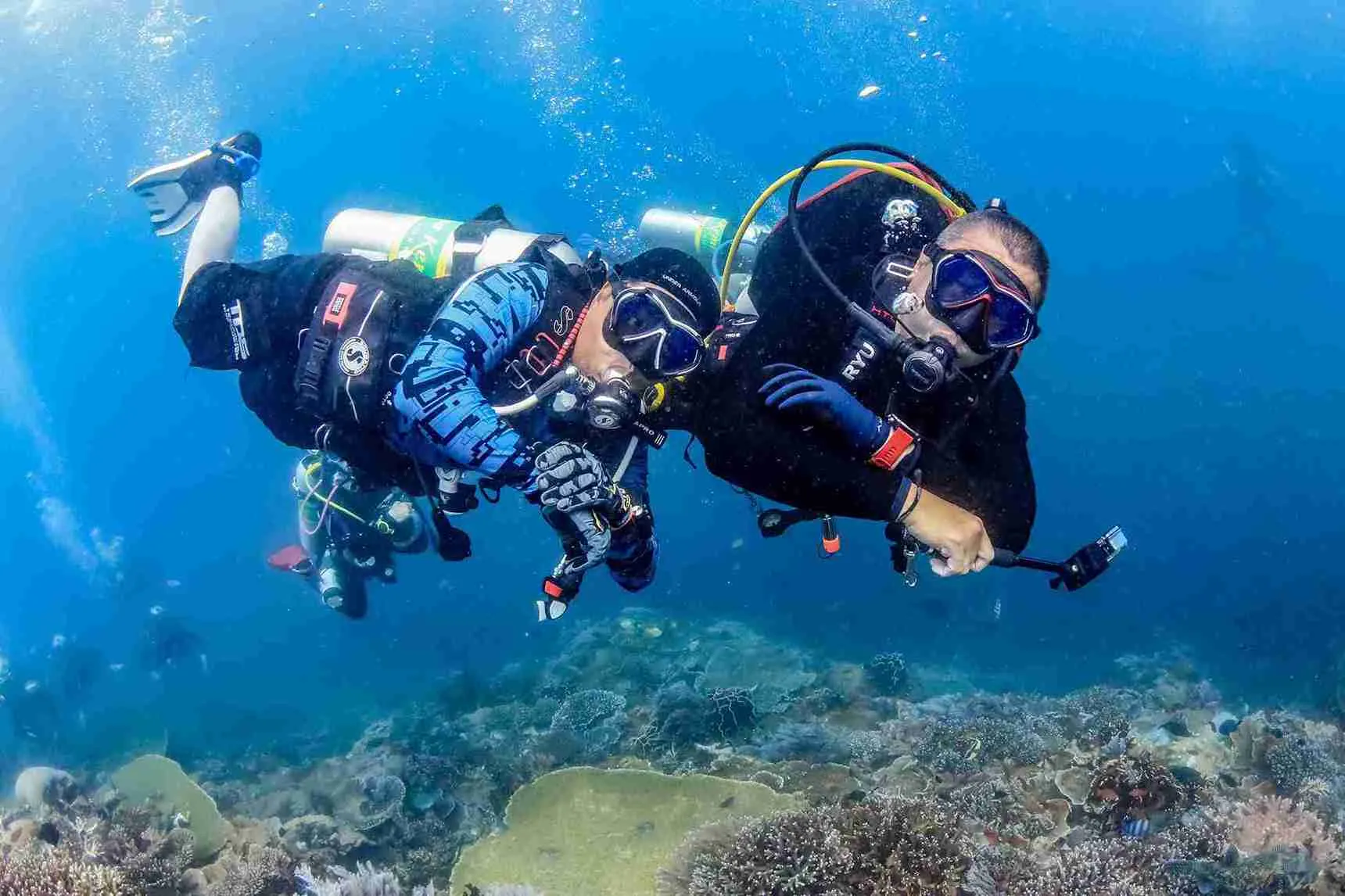
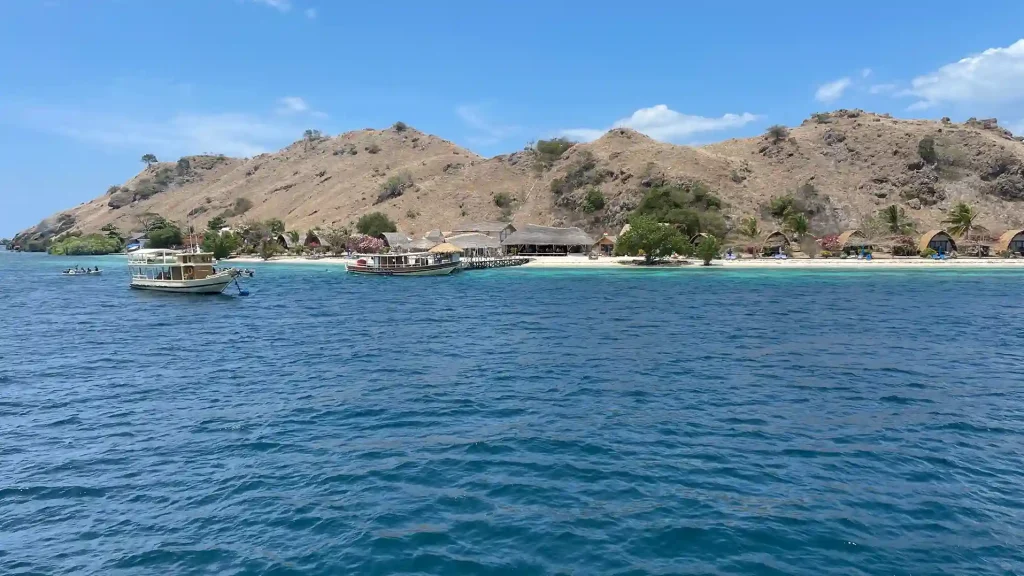
Snorkellers in Komodo see manta rays, green turtles, reef sharks, coral gardens and the Taka Makassar sandbar without any certification. What certification adds is access to current-driven pinnacles like Batu Bolong and Castle Rock. For most first-time visitors, snorkelling covers the highlights.
Is Komodo worth it if you do not dive?
Yes, and more so than most world-class dive destinations. That is a function of geography: Komodo’s signature marine encounter, the manta aggregation at Karang Makassar, happens in shallow water where animals feed near the surface. In Raja Ampat or Palau the best experiences are mostly below snorkelling depth. Here, the headline act is at three metres.
Add the fact that half of what people come for – the Padar ridge, the dragons, Pink Beach, the flying foxes at Kalong – happens above water entirely, and a non-diver on a Komodo liveaboard misses considerably less than they fear.
What do you see at each site from the surface?
| Site | Difficulty | What you see |
|---|---|---|
| Manjarite | Easy – shallow, sheltered | Coral garden, dense reef fish, frequently turtles. The confidence-builder |
| Kelor Island | Easy | Shallow reef straight off the beach; good first swim |
| Pink Beach | Easy – walk-in entry | Fringing reef, hard and soft coral, turtles common |
| Siaba Besar | Easy – calm bay | Known as Turtle Point; green turtles on seagrass, usually several |
| Taka Makassar | Easy, but current at the tips | Bright shallow reef edges off a white sandbar |
| Sebayur | Easy to moderate | Reef slope and wall; good fish life, often the final morning snorkel |
| Tatawa Besar | Moderate – drift | Soft coral garden covered in orange coral; drift with the current |
| Manta Point (Karang Makassar) | Moderate – drift entry in current | Reef mantas feeding and being cleaned, plus rays and turtles |
Two of those deserve emphasis. Siaba Besar is the most reliable turtle encounter of the trip and the one guests underestimate. And Manta Point is the reason to build a little water confidence beforehand – how it is run, and the month-by-month odds, are on our snorkelling cruise page and in the manta season guide.
What do you genuinely miss without certification?
Being honest about this is more useful than pretending there is no gap:
- Batu Bolong – the coral density below 10 m is the best in the park and you cannot see it from the surface
- Castle Rock and Crystal Rock – the northern seamounts, sharks and schooling pelagics
- The Cauldron / Shotgun – a channel drift that only works as a dive
- Time. A diver spends 45 minutes down; a snorkeller’s encounters are shorter and shallower by nature
Those sites and what they require are described in our guide to Komodo’s big three dive sites. They also sit in the north of the park, which means a four-night route – so the certification question and the trip-length question are really the same question, and the routing is on our 4D3N extended itinerary page.
How does a mixed group work on one boat?
Routinely, and better than people expect. While the divers are down, snorkellers are usually on a shallower site nearby or in the tender, and both groups come back for the same lunch. The practical points worth knowing:
- Divers eat and sleep on the same schedule; nobody is left waiting on a boat for hours
- Manta Point is done together – it is one of the few sites where both groups get the same experience
- Park charges differ: the diving fee per diver per day is higher than the snorkelling fee, and both are paid separately in cash, as set out in our park fees explainer
- Tell us at booking who dives, because it changes which sites we build the days around
To be clear about our own position: Neptune Cruise is a dive-friendly phinisi with a dive deck and rinse facilities rather than a dive centre. Dives are arranged with licensed dive operators; we do not employ in-house instructors and we do not certify anyone.
How do you get more out of snorkelling here?
- Get the mask right. A leaking mask ruins more snorkels than current does. Test the fit on the boat on day one, and swap it if it does not seal
- Learn to duck-dive properly. Five metres of breath-hold turns a distant manta into a close one
- Use fins that fit and learn to kick from the hip, not the knee – current is a stamina problem
- Float, do not fight. At a drift site you go where the water goes and the tender collects you
- Wear a rash guard rather than relying on sunscreen; you spend a long time face-down in equatorial sun
Most of that is also in the packing list we send every guest.
Should you certify before you come?
Only if you want to dive for its own sake. Certifying to unlock three northern pinnacles on a first Komodo trip is an expensive way to change one day of a four-day route, and open-water courses are better done somewhere calm and cheap rather than squeezed in beforehand. The honest sequencing for most people is: come, snorkel, see whether the underwater part is what grips you, and certify afterwards for the next trip.
If you are still weighing route length, the comparison is laid out in how many days you need in Komodo, and it is worth looking at snorkeller-friendly boats across the wider fleet to see which operators genuinely build their days around surface swimmers rather than treating them as an afterthought.
Frequently asked questions
Can you see manta rays in Komodo without diving?
Yes. Manta Point at Karang Makassar is shallow and mantas commonly feed near the surface, which makes it one of the few world-class manta sites that works as well for snorkellers as for divers.
Is a Komodo liveaboard worth it for non-divers?
Yes. Mantas, turtles, reef sharks and coral gardens are all accessible from the surface, and a large part of the trip – Padar, the dragon trek, Pink Beach, the Kalong flying foxes – happens above water.
Where are you most likely to see turtles in Komodo?
Siaba Besar, widely called Turtle Point, is the most reliable. Green turtles feed on the seagrass in the bay and are commonly seen. Turtles also turn up at Pink Beach and Manjarite.
Are there sharks where snorkellers swim in Komodo?
Blacktip and whitetip reef sharks are sometimes seen from the surface on shallow reefs. They are not a hazard and generally keep their distance.
Do you need to be a strong swimmer to snorkel in Komodo?
You need to be comfortable in water and able to float and kick without panicking. Most sites are easy; Manta Point and Tatawa are drift entries where the tender collects you downstream. Life vests are provided and plenty of guests snorkel in one.
Talk to the people who sail this route
Half your group diving and half not? Tell us the split and we will build days that work for both rather than parking the snorkellers on a boat.
WhatsApp: +62 811 3823 875
Email: sales@komodoluxury.com
Neptune Cruise is a 40-metre, seven-cabin phinisi operated by Komodo Luxury out of Labuan Bajo, Flores. Send us your dates, how many people are travelling, any dietary requirements and whether anyone in the party dives, and you will get availability and a written quote back – not a brochure.
