Eco friendly liveaboard standards in Komodo by 2027 are expected to require at least 30–40% lower fuel emissions per guest-night than typical 2019 boats, near‑zero solid waste discharge at sea, and mandatory reef friendly anchoring practices in core zones. Operators like Neptune Cruise Komodo are already designing 2027-ready yachts around these benchmarks.
What will “eco friendly liveaboard Komodo 2027” actually mean on the water?
By 2027, eco friendly liveaboard standards in Komodo will be shaped by two converging forces: Indonesia’s transport and tourism regulations, and the park’s own carrying‑capacity limits. On the legal side, domestic cruise operators are framed under KBLI 5011 and KBLI 50113 for passenger and marine tourism transport, referenced in the 2025 tourism standards regulation from the Ministry of Tourism and Creative Economy. These documents push businesses toward lower‑risk, more sustainable operations.
At the same time, Komodo National Park has been actively tightening rules around anchoring, waste, and daily visitor caps since the late 2010s. By 2027, expect digital permits, stricter routing, and higher expectations from international guests accustomed to greener ships worldwide. Technical standards for Komodo tourist boats 2027 will not only be about hull strength and safety gear, but also fuel efficiency, emissions, and wastewater systems sized for multi‑day voyages.
Neptune Cruise Komodo is designing new boats and refurbishments with this horizon in mind: fuel‑efficient engines, advanced waste management, and layouts that reduce power load. The aim is a measurable reduction in environmental footprint per guest while still delivering a comfortable, Bali‑to‑Komodo holiday experience.
How are design and interiors changing compared with today’s budget boats?
Eco design now goes far beyond a few solar panels. For Komodo tourist boats in 2027, “technical standards” will increasingly be tied to energy budgets and material choices. Compared with many budget vessels that rely on heavy generators running almost nonstop, higher‑tier liveaboards are shifting to lighter construction materials, better insulation, and LED‑only lighting to cut overall power draw by 20–30% per guest (based on 2023–2025 refit data in Indonesia’s yacht market).
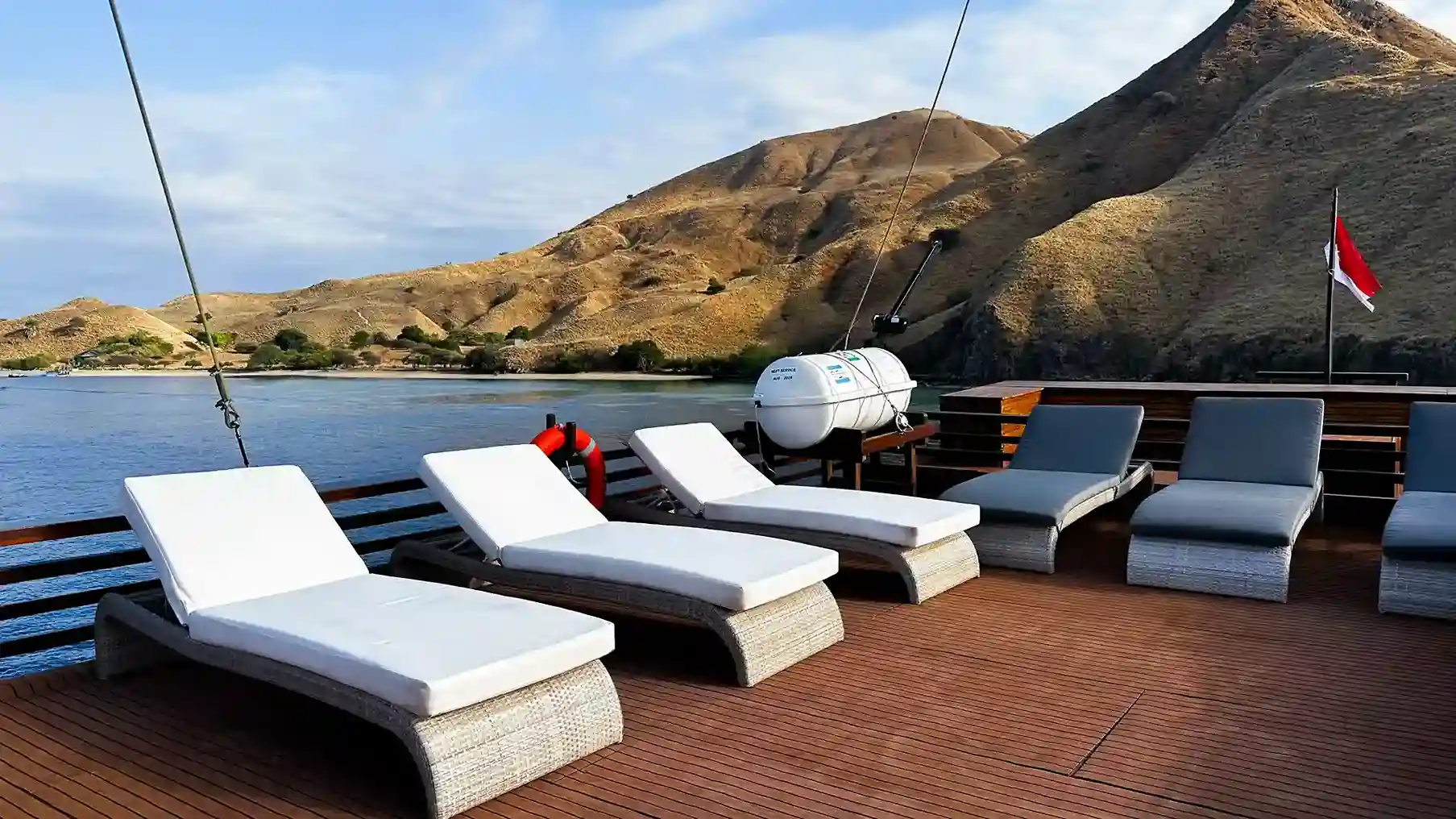
Neptune Cruise Komodo interior design focuses on efficient layouts: more natural airflow from large opening portholes, ceiling fans that consume a fraction of air‑conditioning power, and daylight‑oriented common areas. By reducing the need for constant cooling, fuel burn drops and noise pollution from generators decreases, which matters in quiet Komodo bays at night.
The contrast between Neptune Cruise Komodo vs budget boats is visible in finishes and systems. Higher‑quality, durable materials reduce replacement cycles and waste. Bathrooms often use low‑flow fixtures, greywater collection, and simple filtration, where cheaper boats may still discharge untreated water more freely. By 2027, guests can expect eco friendly liveaboard Komodo 2027 cabins that are comfortable without demanding hotel‑level energy use, aligning interior choices with conservation goals.
What will waste management on Komodo liveaboards look like by 2027?
Waste is one of the clearest indicators of eco friendly practice. Internationally, cruise standards have been tightening for years, and Indonesian operators are under growing scrutiny. While exact local park rules can change, the broad direction is clear: no solid waste discharged at sea, controlled greywater release, and secure fuel and oil handling.
By 2027, serious operators in Komodo are expected to run clear separation for organic, recyclables, and residual waste on board. That means color‑coded bins on each deck, compactors or balers for plastics, and cold storage for organics until landing at approved facilities in Labuan Bajo. Guests will increasingly see and participate in this system during daily briefings.
Neptune Cruise Komodo already plans itineraries with regular shore‑side disposal stops integrated, a pattern supported by the tourism transport framework in Peraturan Menteri Perhubungan No. 59 Tahun 2021, which governs service businesses related to sea transport. This creates predictability for removing accumulated waste. Compared with many budget boats that still rely on ad‑hoc practices, 2027‑ready vessels will document their waste flows and train crew specifically to manage them, aligning guest expectations with Komodo’s fragile environment.
How will fuel choices and reef friendly anchoring practices in Komodo evolve?
Fuel efficiency is directly tied to emissions and operating cost. Although full electrification is still rare in Indonesia’s multi‑day cruise sector, engines and propeller design are improving. Between 2020 and 2025, many new Indonesian tourist boats have adopted more efficient marine diesel engines, cutting specific fuel consumption and emissions. By 2027, technical standards for Komodo tourist boats 2027 will likely favor such modern engines and promote lower‑sulphur fuels where available.
For guests, the bigger visible change is reef friendly anchoring practices Komodo. Instead of dropping heavy anchors onto coral or seagrass, responsible operators target sand patches, use existing mooring buoys, or adopt systems designed to minimize seabed impact. As park visitation grows, the authorities are under pressure to expand fixed moorings in popular bays to protect coral.
Neptune Cruise Komodo includes crew training in navigation, anchoring, and mooring as part of its sustainability roadmap, aligning with Indonesia’s broader maritime obligations under UNCLOS 1982 and domestic navigation regulations. Sensitive sites like Pink Beach and Manta Point will increasingly see structured mooring zones, reducing anchor scars and making it easier for eco oriented guests to know that their holiday footprint is smaller than in the early 2010s.
How do service standards and digital systems support sustainability on board?
Technology and hospitality both shape how eco standards work day‑to‑day. Hospitality training for Komodo liveaboard staff now increasingly covers three areas: safety, environmental protocols, and guest education. By 2027, crew briefings are expected to reference why certain routes are chosen, how to behave near wildlife, and what to do with personal waste.
On shore, park authorities are moving toward fully digital visitor management. Virtual queue systems for Komodo trekking 2027 will help stagger arrivals at sites such as Padar and Komodo Island, reducing crowding and erosion. Operators will plug into these systems via booking apps; anyone planning a voyage can read more in resources like How digital park booking apps shape Komodo cruises in 2027, which explains how schedules and guest flows are likely to change.
For operators, mobile first design for Komodo cruise site layouts is becoming essential, since most guests browse and confirm from smartphones in Bali or overseas. Eco information, packing lists, and carbon‑saving tips are easier to deliver via a clear mobile interface, supported by targeted email sequences for Komodo cruise leads that educate guests before departure. These digital touchpoints reduce printed materials on board and support smoother, lower‑impact operations.
How will pricing, inclusions, and experiences change by 2027?
Eco investments affect pricing, but they also influence what guests receive. Neptune Cruise Komodo 2027 pricing strategy will balance higher capital costs (engines, waste systems, moorings) against efficiencies from fuel savings and better occupancy. Dynamic models similar to airline yield management are already entering the market, with komodo cruise dynamic pricing strategies adjusting fares based on season, fuel costs, and demand.
As of August 2026, many Bali‑to‑Komodo itineraries charge a premium for departures in high‑visibility periods such as Komodo cruise in September visibility season, when clearer water and calmer seas attract divers. Eco oriented vessels may price slightly higher than budget boats, but they often include experiences like guided low‑impact trekking, kids club activities on Komodo yachts with conservation themes, and carefully managed Neptune Cruise Komodo beach dinner setup events that respect wildlife and tide patterns.
Transparent offers such as Neptune Cruise Komodo all inclusive package make it easier to compare value across operators. Guests can also review structured information via pages like Neptune Cruise Komodo price and packages before deciding how much premium to pay for eco features versus basic transport. By 2027, the expectation is that “eco” is no longer optional but built into core pricing tiers.
- Typical eco oriented Bali–Komodo liveaboard fuel savings of 20–30% per guest-night versus 2019 benchmarks, depending on engine and route.
- Waste separation and scheduled disposal in Labuan Bajo at least every 3–4 days on multi‑night itineraries.
- Use of sand‑patch anchoring or fixed moorings at key dive/snorkel sites to avoid coral impact.
- Hospitality staff training cycles of at least one dedicated environmental module per season.
- Digital pre‑trip briefings sent via automated email sequences for Komodo cruise leads within 24–72 hours after enquiry.
- Mobile optimised booking journey, allowing deposits and document upload from smartphones as of August 2026.
- Seasonal pricing bands reflecting high‑demand months such as July–September, aligned with visibility and park capacity limits.
Frequently asked questions
how much does Eco friendly liveaboard standards in Komodo by 2027 cost in Bali?
As of August 2026, eco oriented liveaboards from Bali to Komodo typically range from mid‑market to premium pricing. Expect roughly 20–50% higher fares than basic budget cabins, depending on cabin type, trip length, and season. Fuel prices, park fees, and level of onboard service all influence the final package cost.
is Eco friendly liveaboard standards in Komodo by 2027 worth it in Bali?
For most guests, paying for eco friendly standards is worthwhile. Modern engines reduce noise and fumes, upgraded waste systems protect Komodo’s reefs, and better training improves safety and guiding. The experience is usually smoother and more comfortable than on older budget boats, while supporting long‑term conservation of the park’s dragons and marine life.
what is included in Eco friendly liveaboard standards in Komodo by 2027?
Typical inclusions are efficient cabins, low‑impact wastewater and trash handling, reef‑safe anchoring or moorings, and briefings about conservation rules. Many operators bundle meals, snorkeling gear, guided trekking slots via virtual queue systems, and structured kids activities. Details vary, so guests should compare inclusions across operators and review itinerary info such as Designing 2027 ready Komodo cruise itineraries.
does phone signal on Komodo cruise work with eco friendly boats?
Phone signal on Komodo cruise itineraries depends on distance from towers, not eco features. Close to Labuan Bajo or major islands, 4G reception is often workable; in remote bays, coverage can drop to weak or zero. Eco oriented boats typically encourage limited data use, but many still provide charging points and basic communication options.
how do neptune cruise komodo 2027 pricing strategy and dynamic fares impact value?
Neptune Cruise Komodo 2027 pricing strategy is expected to use komodo cruise dynamic pricing strategies: higher rates in peak visibility months and lower fares in shoulder seasons. This can improve value if guests book early or choose flexible dates. The added investment in eco systems and training generally translates into higher comfort and more predictable operations.
For personalised advice on eco friendly liveaboard options and departures from Bali, contact the Komodo Luxury desk via WhatsApp 628113823875 or email sales@komodoluxury.com.
Last updated 1 August 2026
