Investment opportunities in Komodo cruise ships by 2027 center on mid‑size, Neptune‑class liveaboards (8–14 cabins) targeting premium slow‑travel guests. Based on current yields, well‑run vessels can reach 12–18% annual ROI by 2027, assuming compliant operations, careful seasonality planning, and integration of solar power plus predictive maintenance to control operating costs.
How will Indonesian regulations shape Komodo cruise investment risk by 2027?
Regulatory stability is the first filter for komodo cruise investment opportunities 2027. Domestically flagged vessels moving guests between Bali and Labuan Bajo fall under the national shipping and tourism framework. Core laws include Law No. 17 of 2008 on Shipping, Law No. 10 of 2009 on Tourism, and Law No. 32 of 2014 on Marine Affairs, which together define safety, environmental duties, and tourism standards.
On the business licensing side, domestic cruise operations are aligned with KBLI 5011 (Inland Sea Transport for Passengers, KBLI 2020) and, for tourism‑focused operators, KBLI 50113 (Inland Sea Transport for Tourism) as formalised in the Ministry of Tourism and Creative Economy Regulation No. 6 of 2025. This regulation, effective from 2025, classifies sea‑tourism transport as a medium‑high‑risk activity, which guides capital and compliance planning for investors.
Foreign‑flagged yachts and cruise ships visiting Komodo are governed by the Minister of Transportation Regulation PM 4 of 2022 on foreign yachts and cruise ships in Indonesian waters, as revised by PM 14 of 2023. PM 14/2023, enacted on 23 May 2023, refines permit and port procedures but keeps the overall direction pro‑marine‑tourism. Combined with policies opening 28 ports for foreign yachts and 10 ports for foreign cruise ships, this framework supports feeder traffic into Labuan Bajo.
For investors, this means regulatory risk into 2027 is more about enforcement and local park policies than about sudden legalisation changes. Due diligence should check operator alignment with tourism KBLI codes, compliance under the Minister of Transportation Regulation No. 59 of 2021 on sea‑transport‑related services, and adherence to any Komodo National Park carrying‑capacity guidelines before capital is committed.
What demand and seasonality trends support Komodo cruise ships up to 2027?
Demand for Komodo liveaboards builds on three converging trends: Asia‑Pacific cruise growth, extended “slow travel” patterns, and park‑specific brand awareness. Indonesian marine tourism benefits from the Presidential Regulation No. 21 of 2016 on visa‑free visits, which simplifies short‑stay arrivals, including passengers disembarking from foreign cruise ships at Labuan Bajo.
Into 2027, investors should expect two main guest flows: 3–4‑night domestic and regional getaways from Bali, and 6–10‑night slow travel Komodo with Neptune Cruise‑style itineraries that emphasise Kanawa Island, Padar sunrise viewpoints, Pink Beach, and manta cleaning stations. These longer programs tend to support higher onboard spend and more stable occupancy because they attract dedicated divers and photographers.
Seasonality remains a key risk lever. Historically, June–September is the best month for photography Komodo cruise experiences, with clearer water and dry skies. In contrast, komodo cruise in November rain risk increases as shoulder‑season storms start; sailings are still viable, but investors must plan for slightly higher cancellation probabilities, more flexible routing, and better travel insurance for Neptune Cruise Komodo recommendations for guests.
By 2027, the ongoing development of a smarter, higher‑capacity port at Labuan Bajo is expected to strengthen this demand. Investors should track updates about Smart port Labuan Bajo and its impact on cruises 2027, as improved berthing, waste handling, and passenger flow management can directly support higher vessel utilisation and more predictable turnaround times.
How do Neptune‑class ship economics and sustainability features affect ROI?
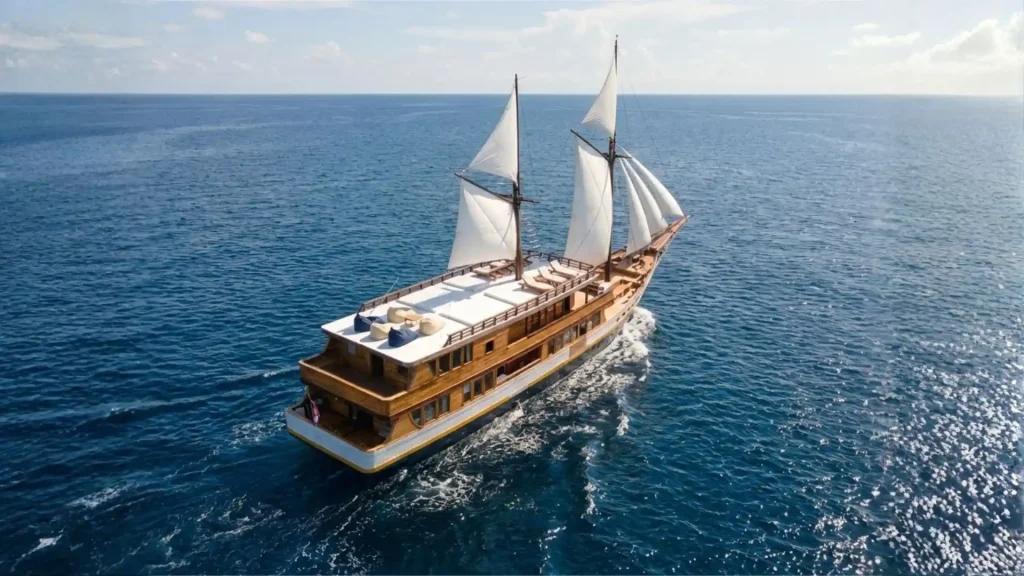
Neptune‑class Komodo liveaboards generally sit in the 20–40‑metre range with 8–14 cabins, targeting 16–24 guests. Revenue drivers include charter rates, bar and corkage, dive services, and specialist departures like photography or investor inspection cruises. Operating costs are heavily influenced by fuel, crew salaries, maintenance, and national park‑related fees.
Fuel cost volatility is a primary concern. Integrating solar power on Komodo liveaboards for hotel loads—lighting, minor refrigeration support, and electronics—can trim generator running hours. Investors should seek concrete design data: panel area, battery storage, and projected diesel savings over a five‑year horizon. Sustainability upgrades also align with Law No. 10 of 2009’s sustainable‑tourism principles and growing guest preference for lower‑impact cruising.
Many operators now factor a sustainability levy in Komodo cruise prices, itemised alongside Komodo National Park charges. In the Neptune context, this can be paired with transparent neptune cruise komodo ranger fee info so guests understand how conservation contributions are used. Clear disclosure can reduce disputes and increase acceptance of modest price rises as of August 2026.
From an engineering perspective, predictive maintenance for Komodo cruise engines is becoming central to cost control. Instead of purely calendar‑based servicing, investors should look for operators deploying condition monitoring: oil‑analysis schedules, engine‑hour tracking, vibration checks, and digital logs. Fewer unplanned breakdowns mean higher on‑time performance, lower emergency repair bills, and better reputation—each feeding into higher achievable charter rates toward 2027.
What product features matter most to higher‑yield Komodo guests?
Revenue per guest in 2027 hinges on product detail. For upper‑mid and premium segments, en‑suite comfort is non‑negotiable. Neptune cruise Komodo ensuite bathrooms—private toilets, hot showers, and functional ventilation—allow higher nightly rates versus shared facilities, especially for mixed‑age family groups and small corporate charters.
F&B policy also impacts margin. A transparent neptune cruise komodo corkage fee structure on wine and spirits gives guests flexibility without undermining onboard bar revenue. Investors should assess typical onboard spend per person and the balance between inclusive and chargeable items. Dockside provisioning access at Labuan Bajo, supported by improving port infrastructure, further stabilises these margins as of August 2026.
Itinerary design remains a differentiator. A Kanawa Island stop on Neptune Cruise itineraries often acts as an “easy win” day—good visibility, accessible snorkelling, and short tender distances, suitable even when sea conditions elsewhere are marginal. Alongside this, having multiple dive‑capable tenders and strong compressor capacity gives cross‑selling opportunities via a Neptune Cruise Komodo diving liveaboard style experience.
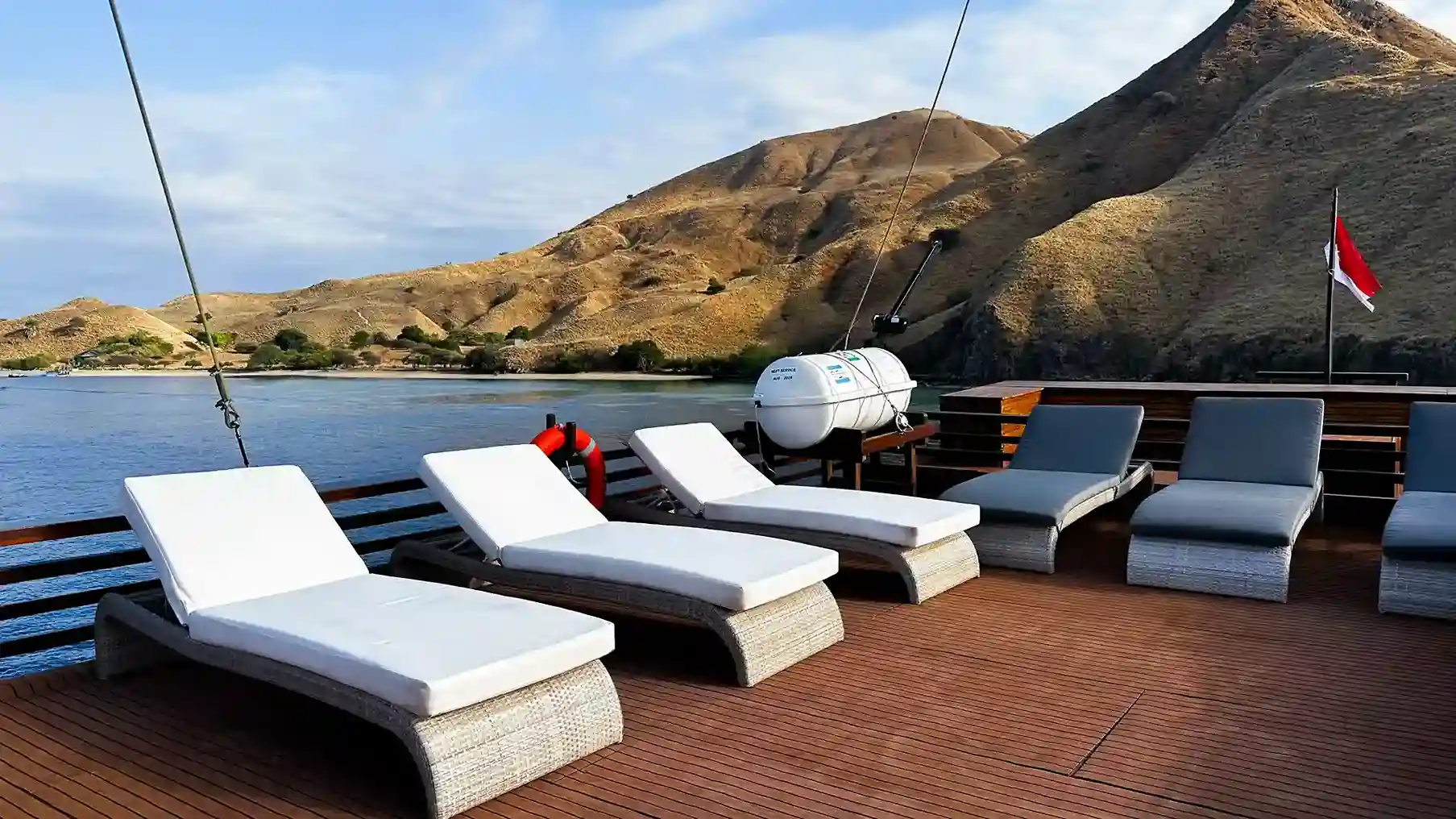
Digital presentation also affects conversion. High‑quality galleries with accurate image alt text for Komodo cruise galleries (“sunrise at Padar from upper deck,” “guest cabin with ensuite bathroom on Neptune”) improve accessibility, help search visibility, and communicate product value clearly to remote investors and guests comparing vessels online.
How can investors structure and de‑risk a Komodo cruise ship investment by 2027?
De‑risking starts with capital structure and realistic cash‑flow modelling. Acquisition or build costs for a mid‑size steel or wooden Neptune‑class yacht can vary widely; many investors work on staged payments tied to survey milestones, followed by an operations ramp‑up period. As of August 2026, typical deposit requirements from retail guests also play a support role: a clearly stated neptune cruise komodo deposit amount helps forecast working capital.
Operator partnership is equally important. Options range from revenue‑share models based on projected occupancy to full‑charter commitments through a dedicated brand desk. A Neptune Cruise Komodo private charter framework can secure blocks of sailings for high‑season periods, stabilising income even before retail sales are finalised.
Risk transfer to third parties should be explicit. Robust travel insurance for Neptune Cruise Komodo is recommended to guests, particularly for monsoon‑edge departures like a komodo cruise in November rain risk period, protecting both trip payments and potential medical evacuations. Investors benefit indirectly through lower refund exposure and better guest satisfaction during weather‑related disruptions.
Finally, governance and transparency matter: clear monthly reporting, audited fuel and maintenance records, and documented compliance with Komodo National Park regulations give investors visibility over both performance and risk. Many operators now support this with periodic investor updates or even a webinar about investing in Komodo yachts, allowing questions on regulatory shifts, carrying‑capacity discussions, and marketing plans into 2027.
- Copy of relevant KBLI registrations (e.g., 5011 and, where applicable, 50113) and proof of alignment with Ministry of Transportation Regulation No. 59 of 2021.
- Detailed technical spec of solar power on Komodo liveaboards: panel wattage, battery capacity, and expected diesel savings over five years.
- Written schedule for predictive maintenance for Komodo cruise engines, including oil analysis intervals and engine‑hour thresholds.
- Standard guest contract showing neptune cruise komodo deposit amount terms, refund conditions, and travel insurance recommendations.
- Sample itinerary highlighting a Kanawa Island stop on Neptune Cruise routes plus seasonal notes (e.g., June–September photography focus).
- Tariff sheet as of August 2026 outlining sustainability levy in Komodo cruise prices, ranger fee breakdown, and neptune cruise komodo corkage fee policy.
- Cabin layout plan featuring Neptune Cruise Komodo ensuite bathrooms and maximum guest capacity for safety and yield analysis.
Frequently asked questions
how much does Investment opportunities in Komodo cruise ships by 2027 cost in Bali?
Entry‑level participation can start from smaller equity slices in a shared vessel project, while full ownership of a Neptune‑class yacht typically requires mid‑ to high‑six‑figure USD capital, depending on size and fit‑out. Additional budget should be reserved for working capital, maintenance contingencies, and marketing over the first 18–24 months.
is Investment opportunities in Komodo cruise ships by 2027 worth it in Bali?
For investors comfortable with tourism and maritime risk, Komodo cruise assets can be attractive. Demand for slow‑travel itineraries from Bali is growing, visa‑free access supports inbound markets, and efficient operations using solar support and predictive maintenance can achieve 12–18% annual yields, assuming competent management and disciplined capacity planning.
what is included in Investment opportunities in Komodo cruise ships by 2027?
Typical structures cover vessel acquisition or refit, licensing under appropriate KBLI codes, technical operations, crew recruitment (including female crew opportunities on Komodo yachts), itinerary planning, and sales distribution. Many partnerships also include marketing content creation, such as professional photography and optimised image alt text for Komodo cruise galleries.
are there specific risks tied to weather and seasonality for Komodo cruise investors?
Yes. The June–September dry season favours occupancy and the best month for photography Komodo cruise programs, while shoulder periods—especially a komodo cruise in November rain risk window—bring higher chances of rough seas or itinerary changes. Robust travel insurance, flexible routing, and conservative weather margins mitigate these operational and reputational risks.
how can investors practically get started before 2027?
Prospective investors can join a site visit or inspection sailing from Bali to Labuan Bajo, review financial models, and attend a webinar about investing in Komodo yachts hosted by an established operator. From there, legal and technical due diligence precede any share subscription, vessel purchase, or long‑term charter commitment via Neptune Cruise Komodo online booking frameworks.
For a tailored Komodo cruise investment outline, projected returns, and available Neptune‑class projects, contact the Komodo Luxury desk via WhatsApp 628113823875 or email sales@komodoluxury.com.
Last updated 1 August 2026
